Product design / UX/UI proof of concept
Jharkhand Tourism
Designing a connected digital tourism experience for discovery, planning and travel.
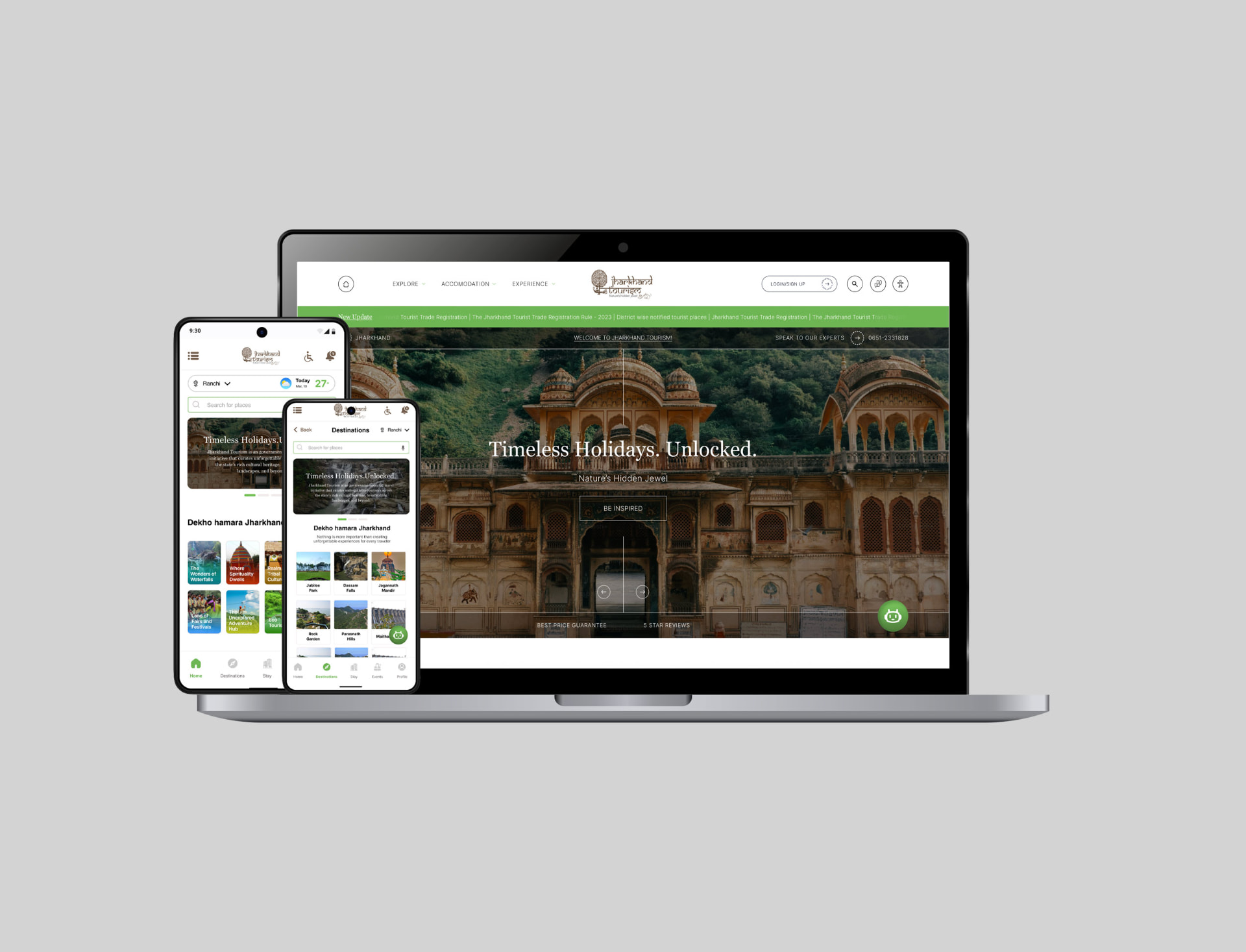
A web and mobile tourism ecosystem concept for discovering destinations, planning trips, booking stays and experiencing Jharkhand digitally.
- UX / Visual Designer
- Responsive web + native mobile
- Figma
- Concept / POC
01 / Context
A diverse destination. One connected journey.
Jharkhand brings together nature, waterfalls, wildlife, spiritual tourism, tribal culture, heritage, adventure, eco tourism and local experiences.
The design challenge for this concept: how might we turn that range into a simple, engaging digital journey for travelers? The work explores the connection between inspiration, practical trip planning and the experience itself—not just a redesigned website.
This is an independent UX/UI concept. It is not presented as a commissioned, launched or implemented government product.
02 / The tourist journey
From the first spark to the trip itself
Discover
Homepage, visual storytelling and featured destinations
Explore
Destinations, spiritual tourism, heritage and eco tourism
Evaluate
Destination and stay details, amenities, maps and nearby attractions
Plan
Travel information and contextual recommendations
Book
Accommodation, room selection, reservation and payment
Experience
JoharBot, virtual reality and continued discovery
03 / Website experience
The homepage as a discovery layer
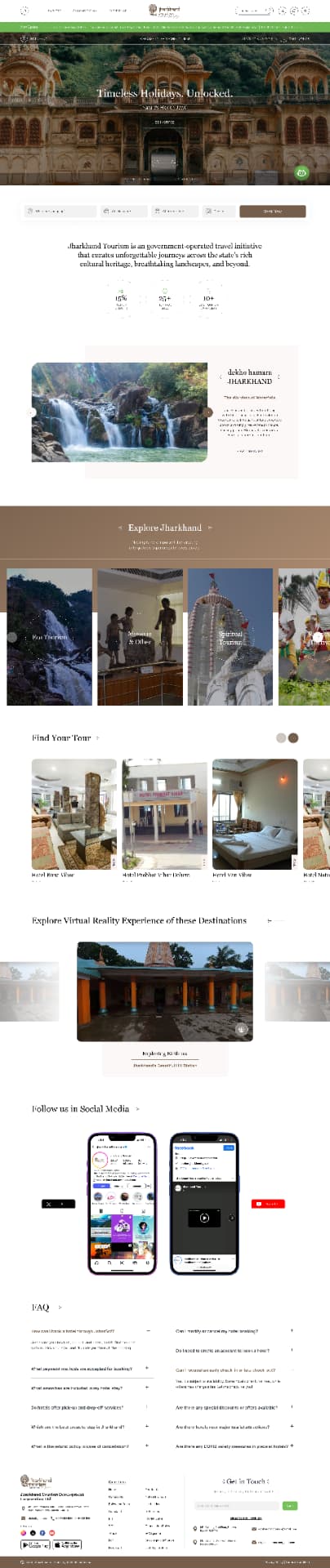
The homepage concept moves travelers from inspiration toward exploration and planning. Destination storytelling leads into Explore Jharkhand, tourism categories, accommodation, destinations, virtual reality, social content, frequently asked questions and contact information.
- Destination-led storytelling
- Explore Jharkhand
- Accommodation and onward discovery
04 / Information architecture
Explore by interest, not by hierarchy
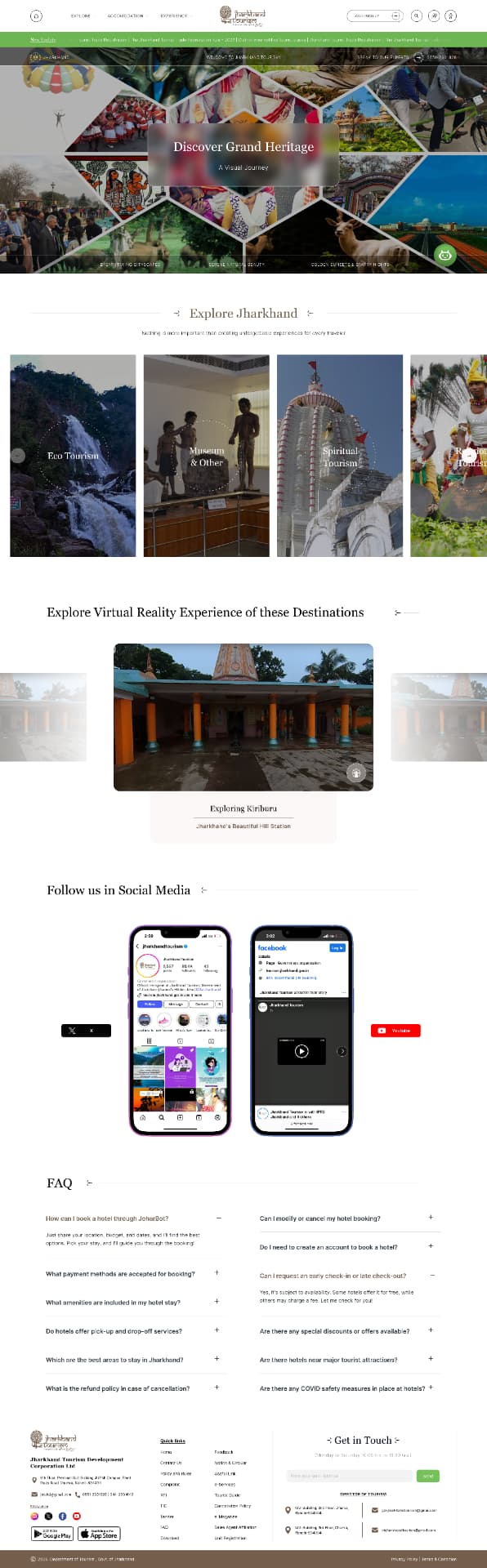
The Explore Jharkhand concept organizes discovery around interests such as eco tourism, museums, spiritual tourism and heritage or cultural experiences. The design objective is to let travelers find a starting point that feels relevant to them.
- Eco tourism
- Museums & other attractions
- Spiritual tourism
- Heritage & culture
05 / Destination experience
A place is more than a pin on a map
Ranchi serves as the representative destination in the concept. Its page brings the introduction, waterfalls, things to do, accommodation, nearby attractions, map, recommendations and virtual reality together so travelers can ask: why visit, what can I do, where can I stay, and what comes next?
- Why visit?
- What can I experience?
- Where can I stay?
- What is nearby?

06 / Content architecture
Making spiritual tourism discoverable
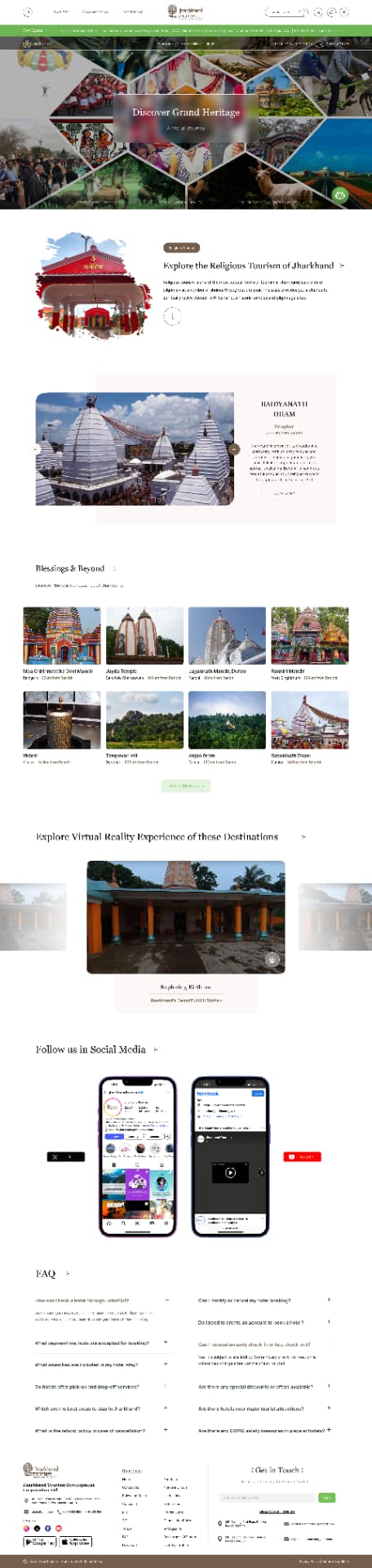
The spiritual tourism concept creates a dedicated path for culturally significant places, including Baidyanath Dham, Maa Chhinnamasta Devi Mandir, Jagannath Mandir, Rankini Mandir, Itkhori, Tapovan Hill, Anjan Gram and Basukinath Dham. Rather than treating each as an isolated page, the aim is a coherent discovery experience.
- Interest-led browsing
- Destination storytelling
- Connected exploration
07 / Accommodation
From finding a stay to choosing a room
The accommodation journey connects search and availability with hotel results, hotel details and room selection. Imagery, room types, amenities, location, ratings and pricing are the information priorities in this concept, helping a traveler compare options before committing.
- Search & availability
- Hotel results
- Hotel details
- Room selection
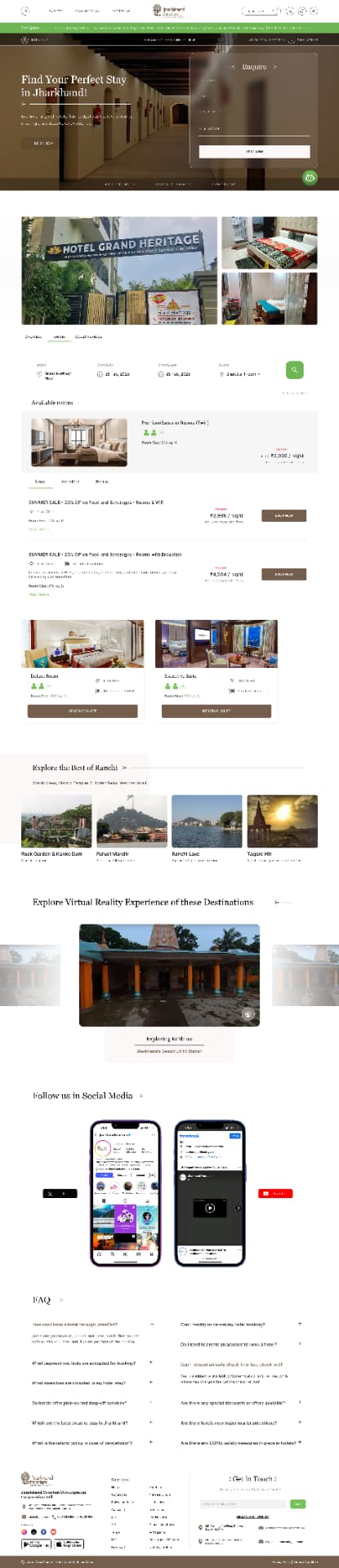
08 / Hotel detail
The stay in the context of the destination
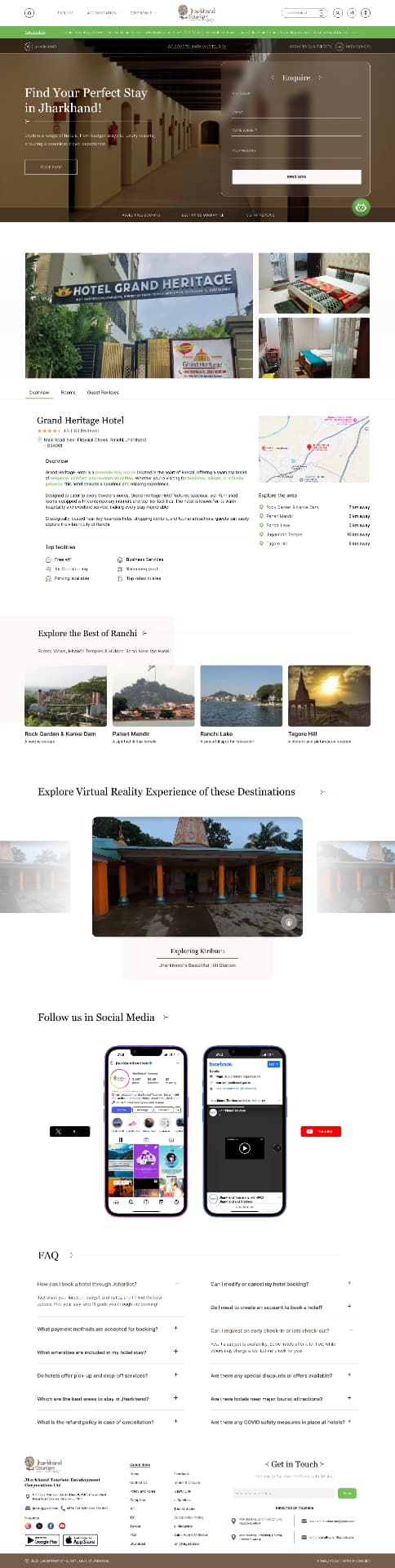
The hotel detail concept brings accommodation information and destination context together: a gallery, overview, amenities, map, nearby attractions and available rooms. The design objective is to help travelers assess both the property and the trip around it.
- Property overview
- Amenities & location
- Nearby attractions
- Rooms & pricing
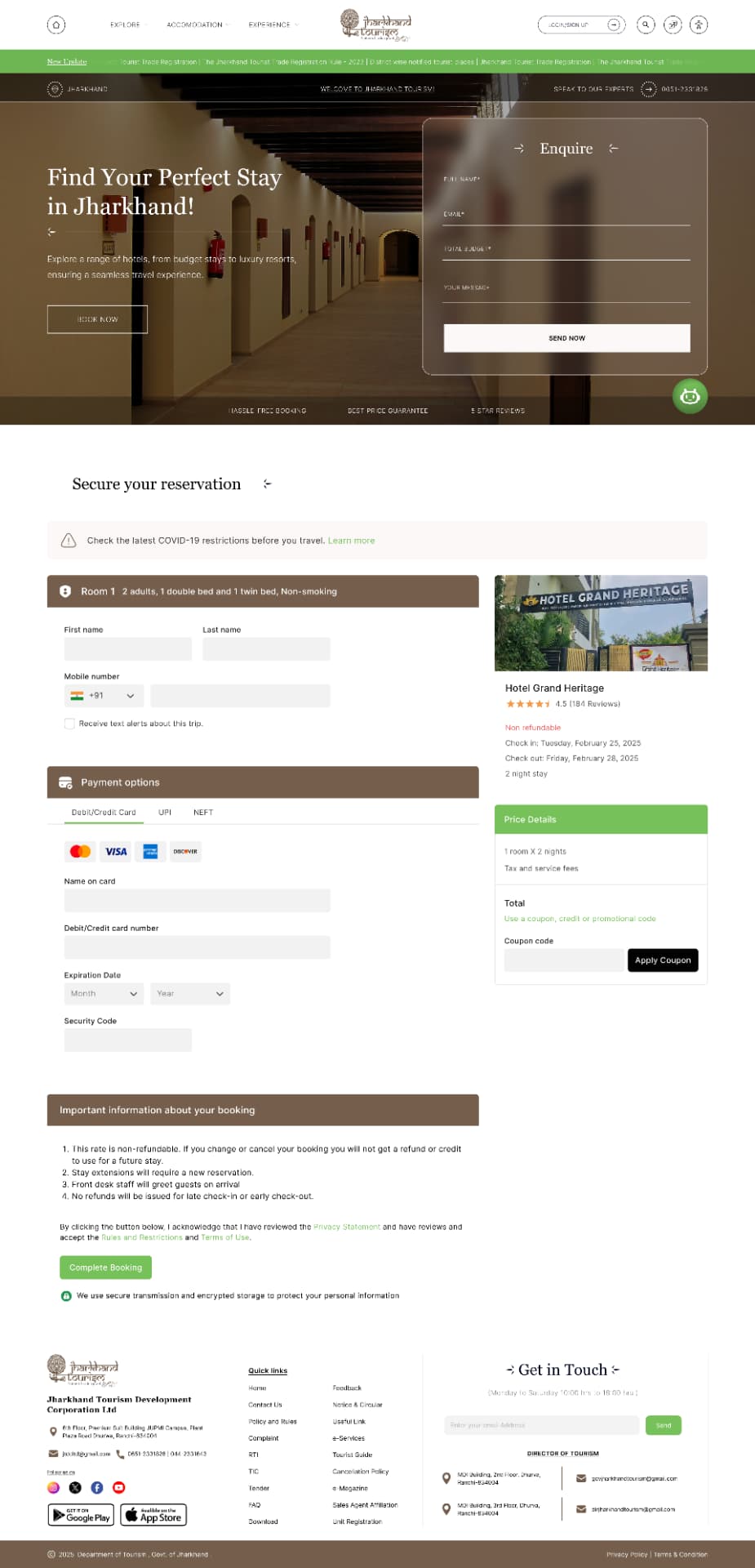
09 / Reservation & payment
Clarity before confirmation
The proposed booking journey moves from room selection through guest details and payment to a price summary and confirmation. Room information, taxes and fees, total cost, cancellation conditions and payment information belong where the decision is made.
- Room selection
- Guest details
- Payment
- Price summary
- Confirmation
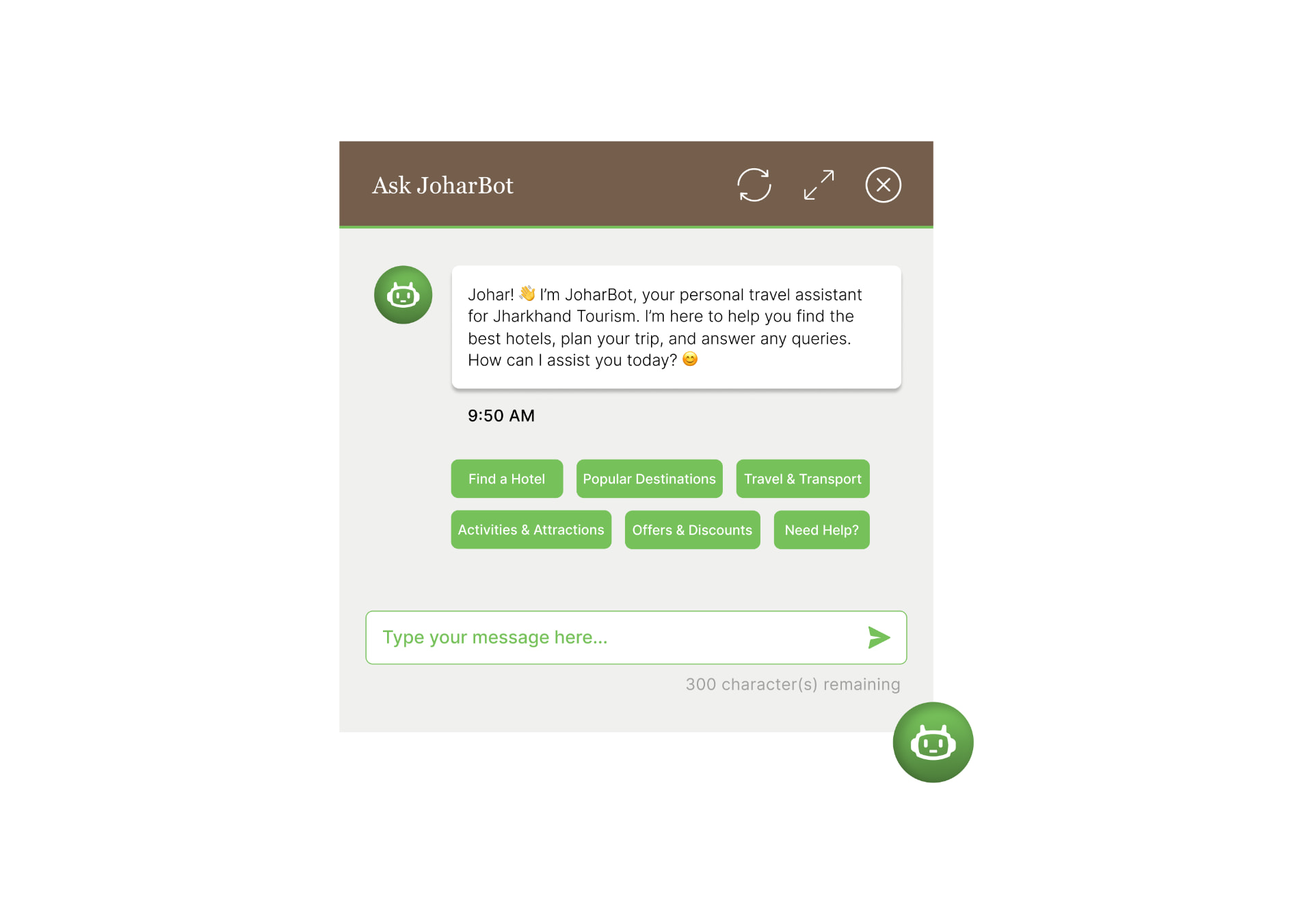
10 / AI experience concept
JoharBot — AI Travel Assistant
JoharBot explores a conversational alternative to traditional navigation for common tourism tasks. The proposed interaction combines chat with quick actions: Find a Hotel, Popular Destinations, Travel & Transport, Activities & Attractions, Offers & Discounts and Need Help? This is a design concept, not a production AI service.
- Conversational assistance
- Quick actions
- Direct access to travel tasks
11 / Immersive experience concept
Experience before you travel
Virtual reality extends destination discovery beyond static information. The concept gives travelers a way to preview a place through an immersive experience before deciding where to go.
- Destination preview
- Immersive discovery
12 / Continued discovery
Make the next step easy to find
Contextual recommendations, such as Explore the Best of Ranchi, are intended to keep exploration going after a destination or hotel detail. Instead of a dead end, each page can open a relevant next path.
- Related destinations
- Nearby experiences
- Next-step discovery
13 / Native mobile concept
Designed beyond the browser
The concept also considers a native mobile travel experience. Discovery and exploration are visible in the existing project cover; further mobile screens are needed before documenting booking, assistance or immersive interactions on mobile in detail.
- Discover
- Explore
14 / Design system
A foundation for connected touchpoints
The proposed system considers typography, colors, spacing, navigation, destination and hotel cards, booking controls, forms, chatbot elements, maps and icons. Reusable patterns are the design objective for keeping the web, mobile, booking and assistance experiences consistent; detailed specifications await the original design files.
- Navigation & content
- Destination & hotel cards
- Booking & form controls
- Assistant & map patterns
15 / Cross-platform experience
One journey, different contexts
The concept spans web and native mobile. Its design consideration is how navigation, content hierarchy, imagery and touch targets adapt to the context; a detailed desktop-to-tablet-to-mobile comparison requires the corresponding source screens.
- Web discovery
- Native mobile exploration
- Consistent content hierarchy
16 / Concept outcome
A connected tourism experience
Designed a connected tourism experience concept that brings destination discovery, accommodation, booking, travel assistance and immersive exploration into one digital ecosystem across web and mobile.
Web experience
Destination discovery and tourism storytelling
Mobile experience
Native travel experience concept
Booking experience
Accommodation through reservation and payment
AI experience
JoharBot conversational travel assistant concept
Immersive experience
Virtual reality destination exploration concept
Design system
Reusable UI foundation across touchpoints
17 / Reflection
Designing for the entire journey, not just the destination.
What interested me most was how discovery, planning, booking, assistance and experience could work together as one coherent journey. This concept is an exploration of those connections, not a claim of measured impact or a live service.